


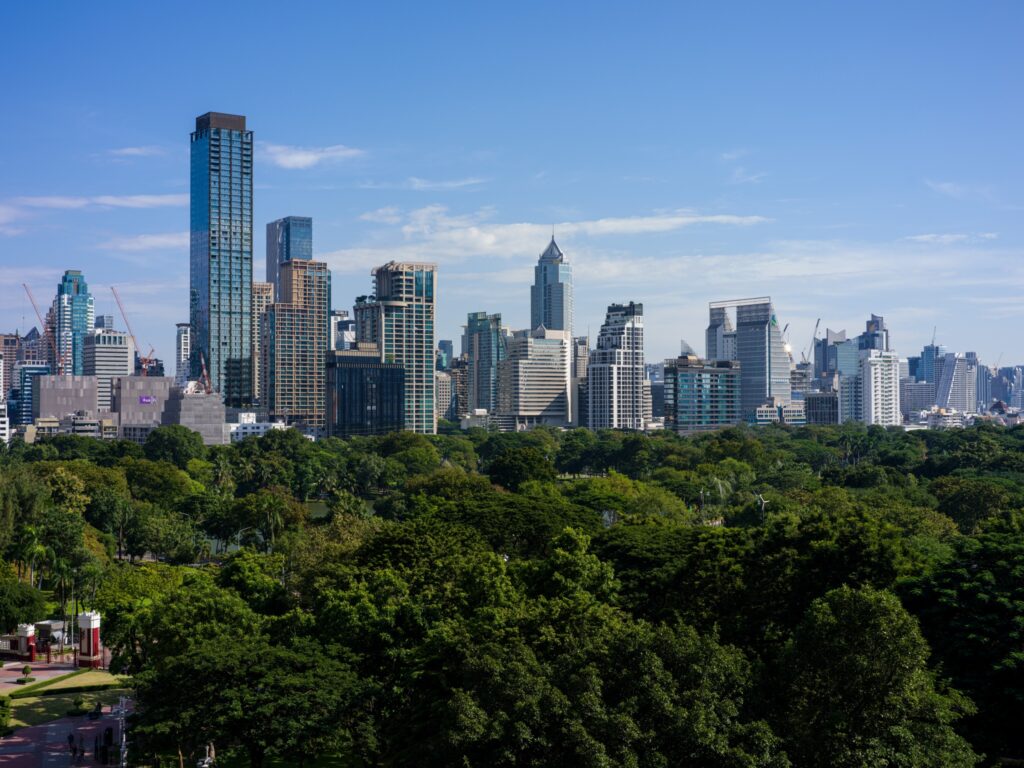
THE INHERITED GEOGRAPHY OF PRIVILEGE: FROM MARYLEBONE TO LANGSUAN
This article is provided only for general information and discussion purposes regarding the experience of living in prime central London and Bangkok. Certain information has been obtained from third party sources believed to be reliable. Views expressed are those of Arcadia Consulting Vietnam as of the date of this material and may differ from the views of other parties.
Nobody thinks to put Marylebone and Langsuan in the same sentence, so here they are in one: two small rich enclaves, several climates apart, both sitting on land that nobody owns in the ordinary way, both wrapped around a park a king paid for. Let us begin with the land because it explains most things.
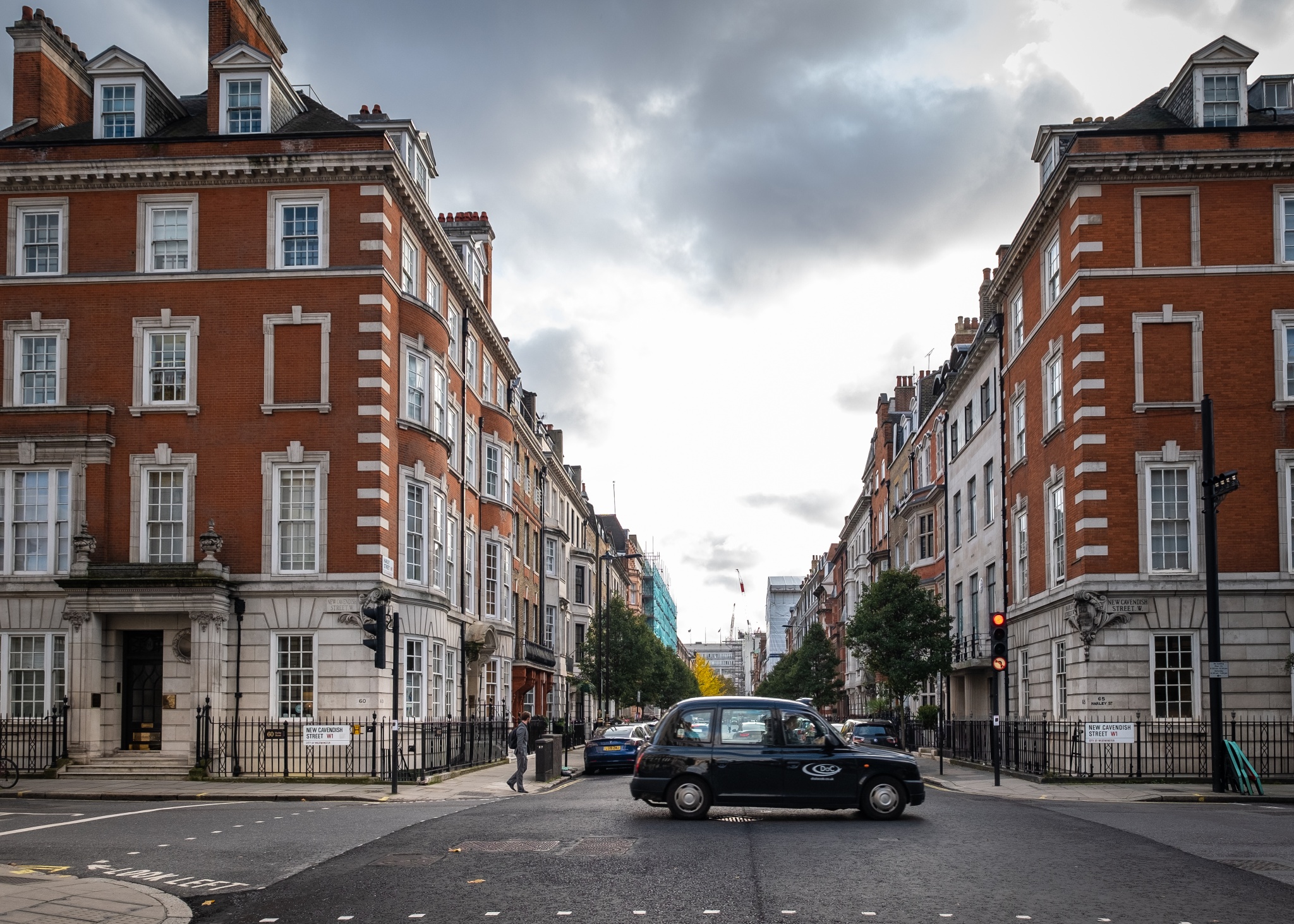
In Marylebone almost everything you can see belongs to a single family. The Howard de Walden Estate holds something like ninety acres of it and over eight hundred buildings, passed down since the early 1700s from the Harleys to the Portlands to the family that has it now, and they don’t really sell. They lease, they renew, and they decide who is allowed to open a door onto the high street, which is why you get a proper cheesemonger and a butcher on Moxon Street and an Edwardian bookshop lined in oak instead of the usual chain sprawl. Everything has been chosen by someone. What you get is the kind of village that a landlord would develop if he owned the freehold and intended to do so for another hundred years.
Langsuan runs the same way, and five thousand miles east that turns out to mean the Crown Property Bureau, the Thai monarchy’s property arm and quietly the biggest landowner in the country, whose own development company built the entire Sindhorn Village stretch down one flank of the soi: the hotel, the residences, the walled gardens that nobody who has not paid gets to walk in. Leases get looked at every few years there too. One patient owner, thinking in reigns rather than quarters, deciding by degrees what the street is permitted to become.
Thus, you can almost line up these two landlords as a neat couple: the baron and the crown, someone who curates a grid in the West End and a tropical soi without ever having to sell. It almost works until you remember that one answers to a family trust, and the other, well, a palace and a lèse-majesté law that could put you in jail for a rude sentence. Then the parallel stops being cute, and you leave it gently.
The names themselves give the game away, all three pointing to something you can no longer see. Marylebone is a worn-down “St Mary by the bourne,” a church that once stood beside the Tyburn, a stream long since bricked over and running unheard under people who never learned its name. Langsuan means, roughly, “behind the garden,” the garden being Lumpini Park just over your shoulder. And the artery feeding the whole district, Wireless Road, is the flat English of Thanon Witthayu, “Radio Road,” named for a transmitter station that stood in these rice fields a century ago and sent the country’s first wireless message before vanishing under everything that came after. A buried river, a park you can see, and a radio mast nobody kept.
Both parks were laid out by royalty employing a designer on the payroll, which sounds like a coincidence and is not. Regent’s Park along Marylebone’s northern edge is John Nash’s, on Crown land, named for a prince who became a king, and Nash drew Portland Place and Park Crescent too, so the neighborhood is thick with his handwriting. Lumpini was King Rama VI’s idea in the 1920s, Bangkok’s first public park, named for Lumbini in Nepal where the Buddha was born, the king’s statue still at the gate.
And Lumpini is where you learn that Bangkok keeps time out loud. Twice a day, eight in the morning and six at night, the national anthem comes over loudspeakers strung through the park and everyone stops. Runners halt mid-stride. The fan-dancers freeze with their fans half open. A man doing something strenuous on the outdoor gym just hangs there. It is so strange for the first week that you suddenly freeze and stare around you for an earthquake or a tsunami that has to come before you catch the tinny music, and the four hundred people around you standing to attention quietly. You copy them because the alternative is to be the one foreigner still jogging through a minute that the entire country has agreed must be still. Then the music ends and everyone unfreezes and goes back to the evening as if nothing happened. Marylebone does not have anything like this; frankly, Marylebone would find it rather much.
Every good park keeps a resident that outranks the humans. Marylebone’s lives behind glass, up in the Wallace Collection at Hertford House, free to wander into, where a battalion of medieval armor stands very still in the half-light and a Fragonard girl kicks her slipper off a swing forever. Lumpini’s resident is loose and the size of the furniture: Asian water monitors, long as a coffee table, hauling themselves out of the lake to bask on the path while everyone politely goes around. You would like to call the lizard the Bangkok equivalent of the armor: the marvel of the local park. But the analogy breaks down before you even get it out because the armor cannot climb trees but the monitor lizard definitely can. As a matter of fact, it once climbed a tree and dropped down from the canopy onto a woman, with enough force to send her to stitches. When the Lumpini population later climbed to around four hundred, the city bagged up some eighty of them and drove them off to a sanctuary in Ratchaburi, to the relief of the more nervous cyclists. The armor has never had to be deported. There is simply no equivalent between these two: just a very old reptile and a room full of empty steel. And you happen to live near one or the other, depending on where you came from.
There is a wrinkle to the lizard that you in particular will enjoy. Its real Thai name doubles as one of the fouler insults in the language, so polite people won’t say it and call the thing tua ngern tua thong instead, “the silver-and-gold creature,” and plenty of older Thais will tell you, straight faced, that spotting one means money is on its way. Which has turned nearly literal, because the skin is now farmed on licensed lots, microchipped, and sold by the square meter to luxury houses for bags and shoes. So the animal ambling past your evening walk could, in a later life, be sitting in a lit window at Central Embassy five minutes up the road. Take the compliment.
That mall is its own small joke, because Central Embassy sits on what used to be the front lawn of the British Embassy. The Brits held that corner from 1922, bought cheap from a Sino-Thai businessman called Nai Lert when it was still half swamp, and they threw garden parties there for the better part of a century under a bronze Queen Victoria that local Thais quietly adopted, leaving offerings at her feet for luck in love and exams and childbirth; when the Japanese occupied the compound during the war they boarded her up but left a peephole, so the story goes, so the old Queen could still see out. Then in stages the embassy sold the lot, the front strip in 2007 and the rest in 2018 for a Thai record, the ambassador’s residence came down, and where the lawn had been there is now a silver shopping center that kept the word “Embassy” in its name and now sells the kinds of handbags for which the park’s least sentimental residents may, in another supply chain, provide the skin. So much for this part of Bangkok: land changes hands and use at a speed that would give a Howard de Walden trustee palpitations.
Then there is the quiet business of staying well, which somewhere along the line becomes the whole point of an address. You have, more or less by accident, moved into the best-doctored square mile of each city. Marylebone has Harley Street, private medicine stacked inside Georgian townhouses. Bangkok has hospitals that understand the healing properties of marble, orchids and fast labwork. Whichever bed you wake in, the good diagnosis is a short walk or a shorter taxi. People your age tend to choose a home for exactly this reason and then never quite say so. Behind the grand streets, meanwhile, run the mews, the cobbled lanes that were the stables once, where the horses and grooms lived out of sight of the good houses and where a small flat now costs more than most actual houses anywhere else. Marylebone keeps its history like that, folded neatly out of view.
The weather is where they finally stop agreeing, and where Bangkok starts properly misbehaving. London commits to grey, a fine patient drizzle that is not quite rain and soaks you regardless, the kind of damp that turns a warm bookshop into a small moral reward. Bangkok does heat with the same conviction, a wet heat that has you plotting a route by whichever side of the street is holding its shade and ducking gratefully from one air-conditioned lobby to the next.
Food, at least, needs no comparison to enjoy. Langsuan hands you the whole ladder inside one block, a serious restaurant and then mango with warm sticky rice from a cart, and thirty seconds from any of it a 7-Eleven whose door goes ding-dong every single time it opens, a sound you stop hearing after a week and would miss if it stopped. Marylebone answers, more quietly, with a flat white and a sausage roll from the Ginger Pig that somehow starts arguments, and muddy carrots from the Sunday market that nobody needed and everybody buys.
So: two enclaves, each with one owner who never leaves, each wrapped around a park some king commissioned, each stocked with excellent doctors, and after that the symmetry frays, which is the utmost honesty. One of them stays composed, hides its concert hall behind a shopfront, files its history into cobbled lanes, and sits on ground that has held for three hundred years. The other stops still twice a day for a song, grows lizards it has to deport, and turned an embassy into a mall under its own skyline. You could live very happily in either.
In Hanoi, the elite of Ba Đình seem to have fashioned their own discreet enclave from the hushed, tree-lined dignity of Hoàng Diệu, the guarded walls of Trần Phú and the cultivated seclusion of the Vạn Phúc Diplomatic Compound.