


VIETNAM RESIDENTIAL REAL ESTATE DUE DILIGENCE FOR FOREIGN INVESTORS
A stalled development has often happened by sequence: missing approvals, delayed land pricing files, trapped compensation pockets, stretched balance sheets and quiet funding freeze.
- Since 1 August 2024, the new Land Law, Housing Law, and Law on Real Estate Business have been in force. 2025-2026 has seen a strong state push to clear “frozen” projects.
- For commercial housing, the public legal sequence is straightforward on paper: approval in principle and investor selection, 1/500 detailed planning, land allocation, construction conditions, land related financial obligations.
- The Ministry of Justice noted that the land financial obligation process may take about three years.
This note is relevant to investors pursuing yield, capital growth, or both. It does not replace buyer side’s legal due diligence, tax review, foreign exchange and banking review, or deal specific advice. Vietnam is investable; choose one with credible cash flow stamina, project focus and proven execution to trust.
DEVELOPER STATUS
— Approval in principle and/or investor selection decision; project company identity; relationship between project company and selling brand.
PLANNING
— Approved 1/500 plan and the latest adjustments; population and product mix consistency
LAND DOCUMENTS
— Land allocation and/or lease decisions, land use documents, compensation, site clearance status
LAND MONEY
— Specific land price determination and proof of land financial obligations being processed or paid where applicable
SELLABILITY
— Evidence the product is legally eligible to be put into business; construction commencement; deposit policy; buyer guarantee option
FUNDING CHAIN
— Audited financial statements; debt maturity profile; major existing projects; bank relationship; contractor payment continuity
EXECUTION
— Main contractors, site progress, procurement pace, labor intensity, if progress matches payment collection
EXIT PATH
— Expected handover timeline, pink book pathway if relevant, building management operator, resale depth, foreign buyer implications
341
On 13 April 2026, Hanoi’s People’s Committee issued Notice 396/TB-UBND, requiring 341 privately funded land-use projects to report by 30 April on actual progress, legal paperwork, sums still owed, financial capacity, reasons for delay and a practical cure plan. One Hanoi legal summary further divides the list into 103 projects allowed to continue, 22 marked for stoppage or recovery, and a larger middle group that remains unsettled.
2,991
80%+ troubled projects tied to legal or procedural issues throughout Vietnam. VND 2.4 quadrillion remains trapped. 926 projects cleared as of Jan 2026.
PHYSICAL VISIBILITY IS DIFFERENT FROM LEGAL CONTINUITY.
— A project can look sale ready while the approval chain, land allocation, site clearance or land financial obligation file is still unfinished.
BUYERS CAN REQUEST LAND INFORMATION AND LAND DATA DIRECTLY.
— Where data is available, provision may be same day. A refusal must be reasoned; more complex retrieval has time limits.
DISCLOSURE FAILURES ARE DUE DILIGENCE PROBLEMS.
— Before business, the seller must publicly disclose core project papers and material restrictions, including mortgage or encumbrance status where relevant.
FOR FOREIGN INDIVIDUALS, OWNERSHIP IS GENERALLY UP TO 50 YEARS FROM CERTIFICATE ISSUES.
— With one possible renewal of up to 50 years. End of term planning is important; failure to dispose or renew in time is not a trivial administrative issue.
1/500
“There is 1/500” is necessary. A detailed 1/500 plan is important because it is part of the legal chain for land allocation, construction, and in some cases exemption from a construction permit from 1 July 2025 onward. But 1/500 is not a purity certificate. A project can have planning movement and still be commercially vulnerable if land pricing, financial obligations, or investor level legal issues remain open.
WHAT FOREIGNERS CAN BUY
30%
All foreign owners together, including foreign individuals and eligible foreign organizations, can own no more than 30% of the residential apartments in one condominium building.
- 30% means all foreign owners combined, not 30% per nationality, broker, or developer. It is a collective ceiling for foreign individuals and eligible foreign organizations together.
- For apartments, the cap is 30% of the residential units in one condominium building. This also covers apartments in a mixed-use building.
- If a project has multiple blocks sharing one basement, the 30% cap applies to each block separately. This is one of the most commonly misunderstood points. “Foreign quota available in the project” does not necessarily mean quota is available in the block you want.
- For landed houses, the rule is different: the headline limit is generally 250 houses within an area with a population equivalent to one ward. If there are multiple landed house projects in that same area, the total foreign owned houses across them still must not exceed 250.
- Quota only matters in eligible projects. Foreigners may buy only in commercial housing projects that are not in areas restricted for national defense or security. The provincial authority must publish the eligible project list.
- Exceeding the quota is not a harmless technical defect. A transaction above the legal cap, or in a project not open to foreign ownership, is legally invalid for certificate purposes. The buyer may not get the ownership certificate.
- The practical check is simple: ask for written confirmation of the remaining foreign quota at the exact building or block level, not a verbal assurance at project level. Under Decree 95, the housing authority and the seller are supposed to track and post this information. Even where quota remains, the buyer still needs the right buyer status, the right project type and a legally sellable unit.
KNOW YOUR NEIGHBORHOOD
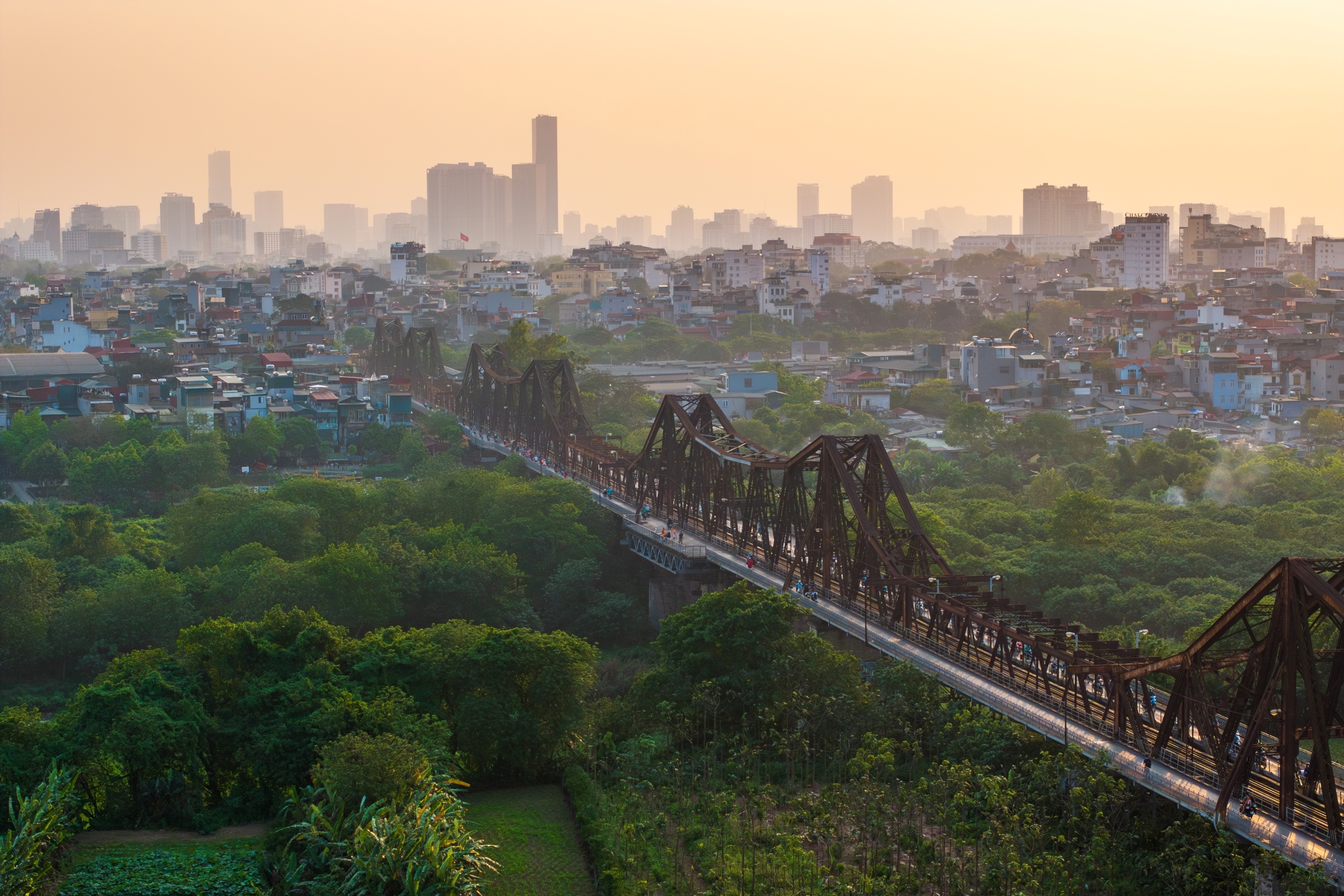
Hanoi
- 712 delayed off-budget land-use projects.
- 420 removed from delayed list but still monitored.
- 292 still under direction / follow-up.
Publicly reported +101% from 03/2023 to 03/2026; lower gross yield than Ho Chi Minh City from constrained legal supply, owner-occupier demand and premiumization in key corridors.
- Tay Ho and the Ciputra axis of ~132-275-490 mil. VND/m2 remain comfortable addresses for expatriate families, embassy-linked households and affluent domestic buyers who prioritize environment, air and school access over the absolute shortest commute into the old city center.
- The core-west belt ~123 mil. VND/m2 around Nguyen Chi Thanh and nearby prime projects brings different demands: established domestic wealth, professionals and buyers who still need immediate access to mature office and education clusters.
- Dong Anh and Co Loa at ~87-120 mil. VND/m2 are being repriced by the eastern-northern expansion story. Buyers here are a mix of patient investors, higher-income young families, and those who are underwriting future infrastructure.
- Gia Lam / Vinhomes Ocean Park ~99 mil. VND/m2 remains a legible mass market planned-community play. It works better for staged owner-occupier demand than for investors who require early premium yields.
- South and southeast nodes such as Hoang Mai and Yen So ~68-80 mil. VND/m2 are gaining relevance because they offer newer stock at lower entry than the premium west, while still staying within Hanoi’s real urban catchment.
KNOW YOUR NEIGHBORHOOD
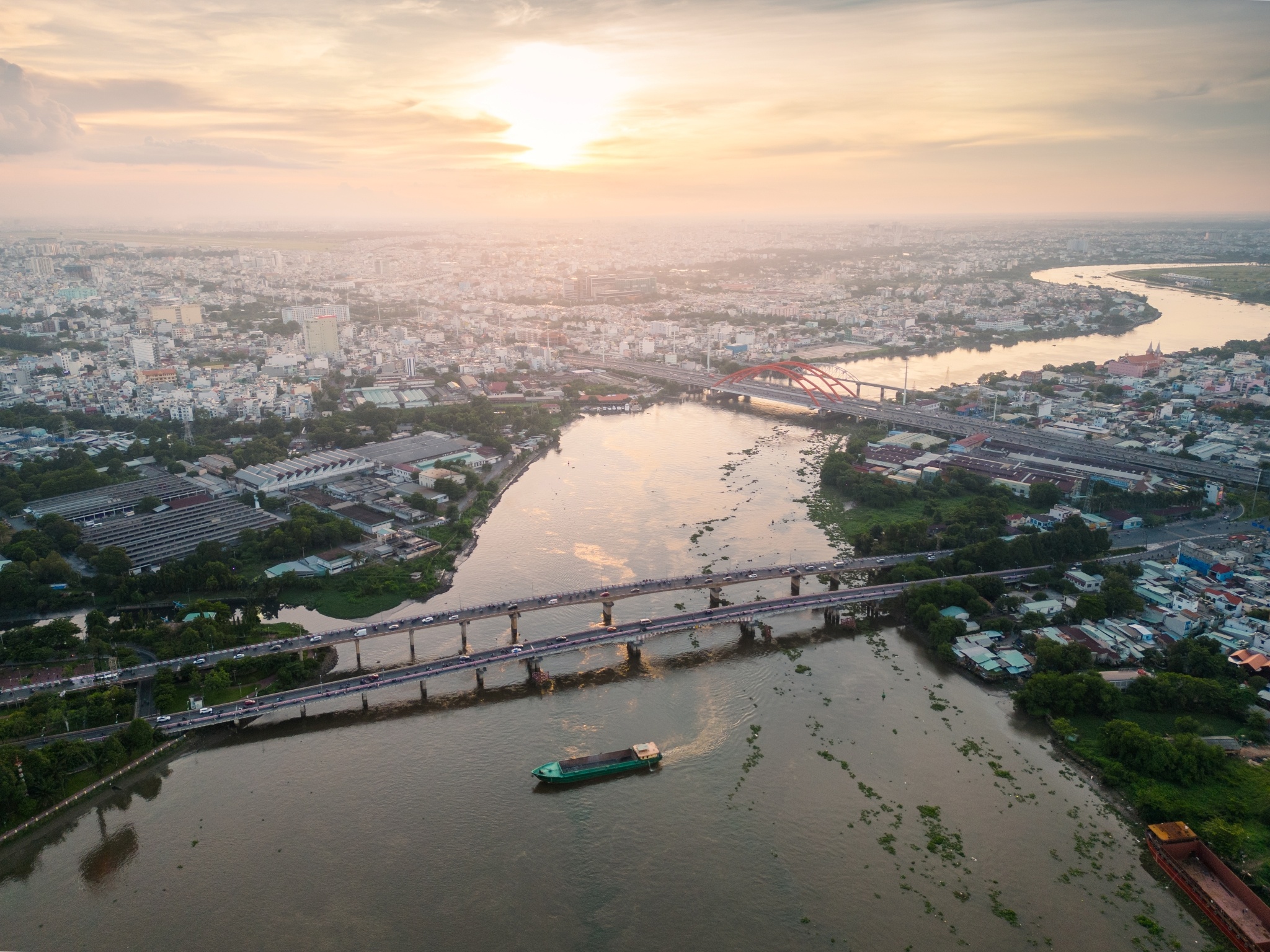
Ho Chi Minh City
- 838 stalled works / projects / land plots.
- 712/838 handled or given direction by year end 2025.
- 68 live land pricing documents, with about 100 projects expected to get specific land prices in 2026.
Apartment prices publicly reported up more than 300% over 10 years by new supply shifted upscale, expanded city geography widened the price ladder.
- The enduring stability of Chợ Lớn in District 5, District 6 and District 11 holds value because commerce is deeply embedded within resilient family structures. Its intergenerational merchant trust is anchored by the long-settled Chinese-Vietnamese households. Unlike newer developments, these neighborhoods, where house a dense network of major public schools and Tier 1, final-referral hospitals, do not rely on “investors talking to other investors” to sustain pricing.
- Thao Dien remains a convenient foreign-family rental corridor in the city because the projects, schools, retails and cross-river access are already internalized by the tenant base.
- Thu Thiem-An Phu-Nam Rach Chiec is the most obvious premium expansion corridor. It attracts higher income domestic buyers, offshore Vietnamese capital and foreign purchasers who want newer stock, brand-name developers and a modern urban image.
- Binh Thanh is efficient because it sits between CBD access and a deep tenant base.
- District 7, particularly Phu My Hung, remains the most stable family-oriented planned township where landed houses can screen ~333-473 mil. VND/m2. Buyers are often older, more use-driven and more patient due to planning discipline, school ecosystem and community continuity.
KNOW YOUR NEIGHBORHOOD
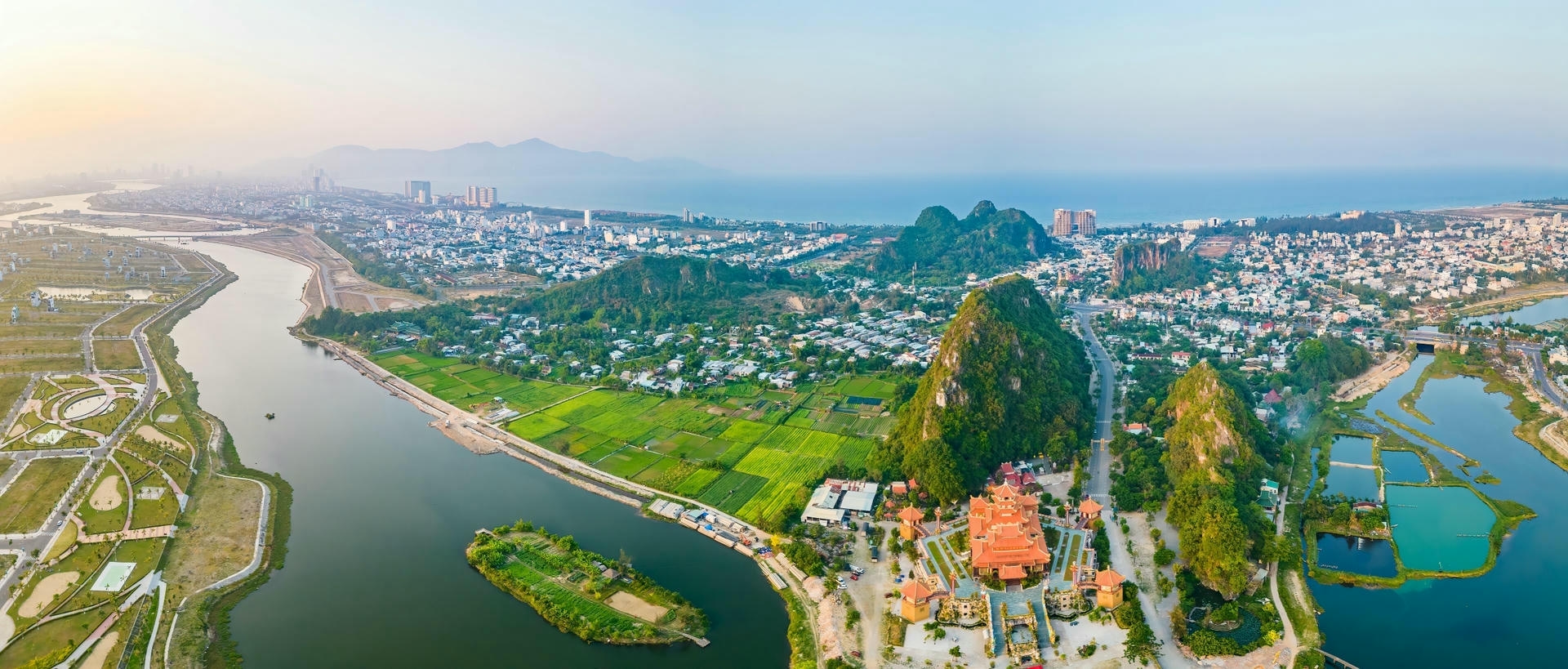
Danang
- 2,035 projects / land plots / housing-land facilities in the special clean-up inventory.
- 1,981/2,035 cleared by 26 February 2026.
- 16 repricing cases still central to the land-money cleanup process.
Apartment index ~+68% versus 2019 base; primary ~83 mil. VND/m2, +14% versus 2024 due to return of the apartment cycle, widening non-tourism demand and merger expanded city narrative.
- Hai Chau and the Hoa Cuong Nam riverfront corridor are well fitted for urban living: core-city convenience, newer high rise product, river adjacency and year-round occupancy logic than pure coastal product speculation.
- Son Tra and the Peninsula facing areas still attract second home and lifestyle buyers. Vacancy risk rises fast by generic products and buyers underestimate seasonal demand swings.
- Hoa Hai and the FPT/Ngu Hanh Son belt remain the city’s clearest education-tech-residential growth corridor. Entry tickets of 2.25-4.79 bn. VND for 1BR, 5.17-7.57 bn. VND for 3BR stay below the most prestige-heavy riverfront and beach products while the buyer base is a blend of local upgraders, Ho Chi Minh City/Ha Noi investors, and working households tied to the tech-education axis.
5%
A developer may collect a deposit of not more than 5% only when the future asset already satisfies the legal conditions to be put into business. The deposit agreement must also state the sale or lease purchase price.
- The future house / building has been commenced, has one of the listed land-use-right documents, and also has the required construction law documents. For apartment buildings and mixed-use towers with housing, there must be proof that the foundation has been completed and accepted.
- Before sale or lease purchase, there is also a state notification step: the developer must notify the provincial real estate business authority that the future housing is eligible for sale / lease purchase, and that authority must reply in writing within 15 days.
- First payment cap: for sale of future housing, the first payment may not exceed 30% of contract value including the deposit. For lease purchase, the first payment also may not exceed 30%, and pre-handover payments may not exceed 50% of the lease purchase contract value.
- 95% Cap before certificate: if the buyer / lease purchaser has not yet received the land-and-asset certificate, the seller may not collect more than 95% of contract value before issuance of that certificate.
- Buyer guarantee is optional at buyer level, but not casual: the developer, before selling / lease purchasing future housing, must have a bank’s approval for the guarantee arrangement. The buyer may choose with or without that guarantee, but any waiver must be agreed in writing at contract signing.
- If the buyer wants the guarantee, it should become a real document: the bank issues a guarantee letter for the buyer based on the signed contract; the developer may receive contract payments only after the buyer has been provided and has received that guarantee letter.
- Land use rights’ transfer with infrastructure: for transfer of land use rights with technical infrastructure in a real estate project, the transferor must complete land related financial obligations.
- Whole or partial project transfer: if the issue is not lot transfer but transfer of all or part of a real estate project, the transferor must already have the land decision and must have completed the project’s land related financial obligations.
VIETNAM FOR FOREIGN INVESTORS
IS VIETNAM RESIDENTIAL REAL ESTATE INVESTABLE FOR FOREIGN BUYERS?
— Yes. Vietnam residential real estate is investable for foreign buyers who approach the market with patience, local context and rigorous project review. The country has active urban demand, rising infrastructure and a growing base of internationally minded residents, owners and investors. Opportunity exists, although it rarely sits evenly across every location, price band or project type.
HOW SHOULD FOREIGNERS READ THE VIETNAM MARKET TODAY?
— Vietnam’s property market has more depth than casual skepticism allows and more pressure than promotional material can capture. A strong purchase usually depends on approved sale structure, suitable foreign ownership quota, a capable developer, construction progress, an efficient neighborhood and a credible path for leasing or future resale.
WHAT IS ARCADIA CONSULTING’S VIEW ON VIETNAM RESIDENTIAL REAL ESTATE FOR FOREIGN INVESTORS?
— Vietnam’s long-term direction can be attractive and reward selective capital, as each purchase needs its own review. Arcadia Consulting assesses evidence of funding capacity, eligible foreign ownership, thoughtful product mix, neighborhood livability, leasing potential and exit path. Our aim is to help foreign buyers spend time on opportunities with enough substance for capital commitment.

Arcadia Consulting brings together senior practitioners from residential brokerage, investment banking, capital markets and professional practice spanning Singapore, the United Kingdom, Australia, Malaysia, Thailand, China and Vietnam. We advise private clients, families and selected investors who consider real estate within the broader approach of capital preservation, lifestyle planning and intergenerational continuity.
Arcadia Consulting Vietnam prioritizes assets where demand is repeatable and explainable: metropolitan units in genuine life corridors, leisure homes that operate with resilience, and branded residences matched by confident price-to-experience discipline.
ARCADIA CONSULTING VIETNAM
17 Ngo Quyen Street, Trang Tien Ward, Hoan Kiem District, Hanoi
ARCADIA CONSULTING SINGAPORE
10 Anson Road, #10-11, International Plaza, Singapore
ARCADIA CONSULTING THAILAND
17 Soi Thawi Watthana-Kanchanapisek 2 Thawi Watthana, Bangkok
Let’s talk