



VIETNAM’S REAL ESTATE MARKET: WHERE THE MONEY FLOWS FIRST
Vietnam is opening its housing market wider, but on its own terms: measured approvals, strict caps and a bias toward heavyweight developers. Prices are running hot, infrastructure is reshaping the map, and early-mover capital will flow to where the state is signaling growth. For global investors, opportunity is there, but so are the limits, and knowing where the state is pointing the shovel may matter more than where the cranes stand today.
THE GATEKEEPER AND THE NEW ENTRANTS
Ho Chi Minh City has just opened the door wider for foreign homebuyers, unveiling a list of nearly 50 apartment projects where overseas ownership is allowed according the Ministry of Construction. In Thu Duc City’s east, CapitaLand’s Vietnam arm added three projects in Cat Lai including Vista Verde, the Y1 commercial apartments and Define to the pool of foreign-eligible stock. A residential project in nearby Binh Trung Dong from CVH Mua Xuan also made the cut.
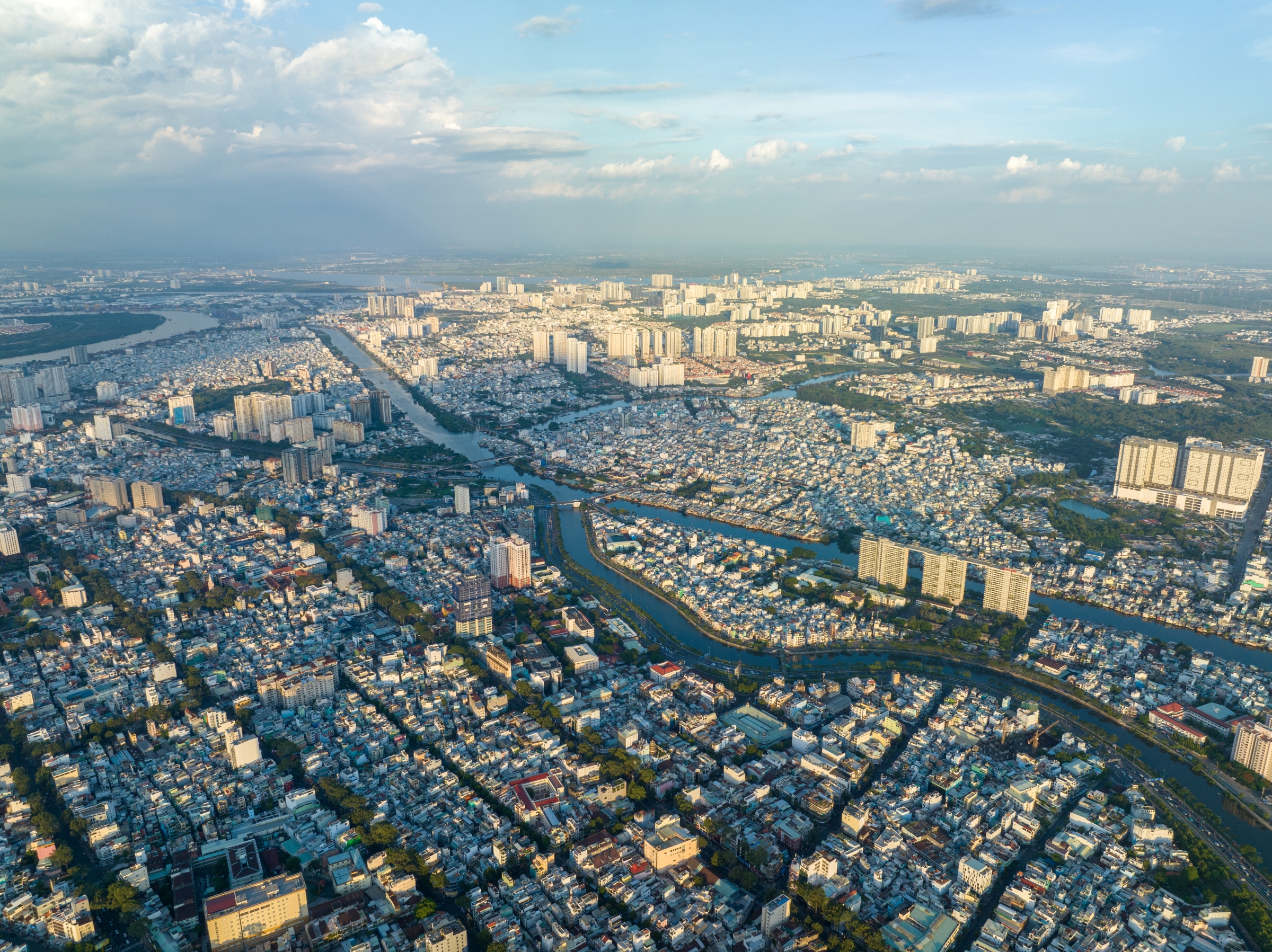
One name towers over the list: Phu My Hung. The developer behind the city’s most recognizable urban projects controls 39 of the 48 approvals, almost all of them clustered in the Saigon South township. These include a roll call of familiar addresses including The Panorama, Park View, Riverpark Residences, Sky Garden, Scenic Valley and Happy Valley along with three Midtown towers built in partnership with Japanese investors.
THE LEGAL GUARDRAILS STAY FIRM
Vietnam’s new Housing Law, together with Decree 95 introduced this year, spells out exactly how foreign buyers and organizations can legally own homes in the country.
For local companies, the requirements are straightforward: a valid business registration or investment certificate is needed. Foreign developers looking to build housing projects must hold an investment license, while other overseas organizations operating in Vietnam need permits or establishment papers issued by the authorities that remain valid at the time of transaction.
For individual buyers from abroad, the rules are tighter. Purchases are limited to commercial housing in projects deemed non-sensitive for national defense and security. Even then, ownership comes with clear caps: no more than 30% of the apartments in any one building, or up to 250 landed homes within a single ward.
SUPPLY RISING, BUT AFFORDABILITY VANISHING
Authorities approved 58 new projects with capacity for more than 16,600 homes and land plots, almost 30% more than the previous quarter. On the ground, 1,517 projects remain under construction, accounting for roughly 544,000 units, while 157 developments with over 52,000 homes are now cleared for sale, either completed or off-plan. That is a jump of more than 55% quarter-on-quarter.
Even with that flow of supply, affordability is slipping further out of reach in the country’s two biggest cities. Homes priced under 60 million dong ($2,400) per square meter are now a rarity in both Hanoi and Ho Chi Minh City. Hanoi saw the sharpest climb, with average selling prices at 80 million dong per square meter, up 5.6% from the first quarter and 33% year-on-year. Ho Chi Minh City remains pricier, averaging 89 million dong, a 36% surge from the same period last year.
INFRASTRUCTURE IS THE REAL CATALYST
Ho Chi Minh City has mapped out a two-stage plan for transit-oriented development (TOD), tying new housing and commercial districts directly to the city’s emerging metro and ring road network.
The first phase, running through 2024-2025, will pilot nine sites along Metro Lines 1 and 2 and the Ring Road 3 corridor. On Metro Line 1, more than 160 hectares around Phuoc Long Station in the former Thu Duc City have been earmarked for redevelopment. Line 2 will anchor three smaller but strategic sites: a 26-hectare block in Tay Thanh, 5 hectares at the Tan Binh Exhibition and Sports Center, and 41 hectares at the C30 site near Le Thi Rieng Station.
Ring Road 3 brings some of the biggest land banks into play in Thu Duc City, plus three large tracts in Hoc Mon District. The second phase, from 2026 to 2028, will push TOD further out. Priority sites include 290 hectares in Tan Hiep, running alongside Ring Road 3, and a vast 314-hectare zone around Tan Kien Station in Binh Chanh District where Metro Line 3 will extend and eventually connect with the planned Ho Chi Minh City-Can Tho railway.
REGISTER YOUR INTEREST